

I have no shame admitting i was on Facebook, and I just came across a photo taken on December 30, 2019, in the EBF conference room. Exactly six years ago. The kind of memory that doesn’t need a filter to remind you of one simple thing: some ideas are born in ordinary rooms, among people who trust one another—not in a “grand plan” printed on glossy paper.
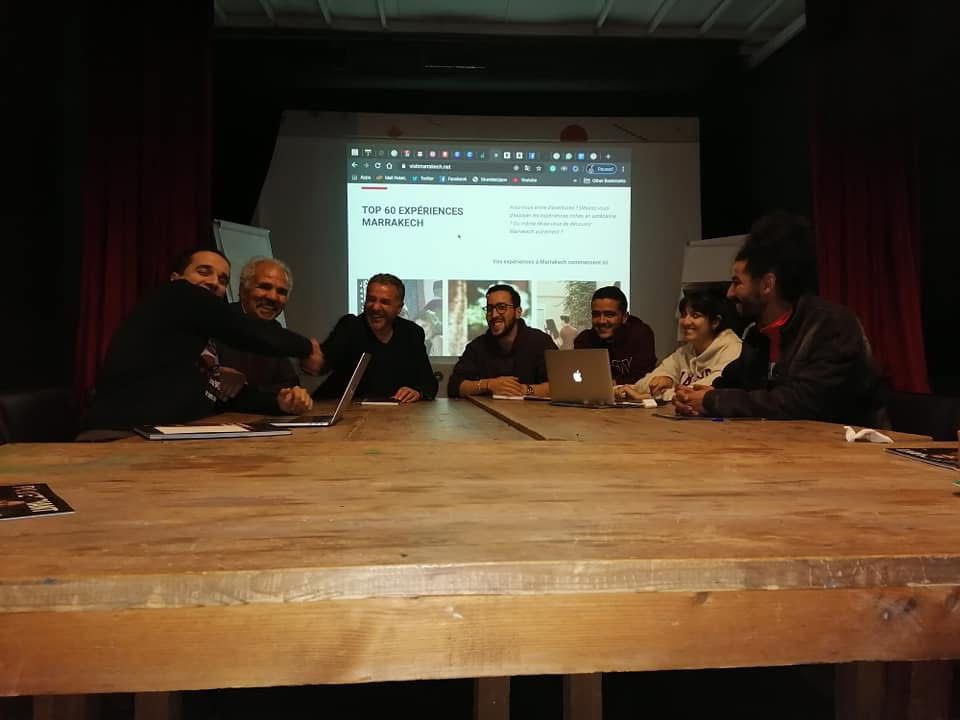
In that photo, you see Hamid Bentahar, already at the heart of tourism dynamics then, as he has been for quite some time now. Beside him are profiles that don’t belong to the sector’s traditional casting. You also see, alongside Ssi Bentib, Director of the CRT Marrakech-Safi, Nawfal, Ahmed, Hind, and Idlane.
That detail matters more than it seems, because it symbolizes exactly what we were trying to do—without yet naming it properly: create a space where tourism agrees to engage seriously with agility, tech, design, creativity, and above all with a generation that doesn’t ask for permission to experiment.
That day, between us, a word was floating in the air—partly handcrafted, partly visionary:
“Augmented CRT.”
Not a slogan. An intuition.
My role, in my place
I’m not telling this story to talk about myself.
But I can’t pretend I wasn’t part of it.
At the time, I had the privilege of supporting the National Tourism Confederation on a digital strategy and action plan, and then, from that moment on, continuing to act as a bridge between tourism institutions and our innovation ecosystems. My goal—or my style—was never to “take the stage.” Rather, it was to contribute alongside the best players to structure, connect, translate, and sometimes—when needed—gently disrupt habits.
In the same spirit of modeling and structuring, I also co-produced publications on the creative economy. Notably a strategic ICC-style report with Hamid, including a core chapter that said the essential thing quietly:
“Tourism in the age of creativity.”
Because, deep down, it’s the same idea that keeps coming back, in different forms: hospitality is not a fixed sector—it’s a living material. And it grows stronger when it embraces creation, data, and useful innovation.
References to download:
CNT Digital Strategy (diagnosis and action plan):
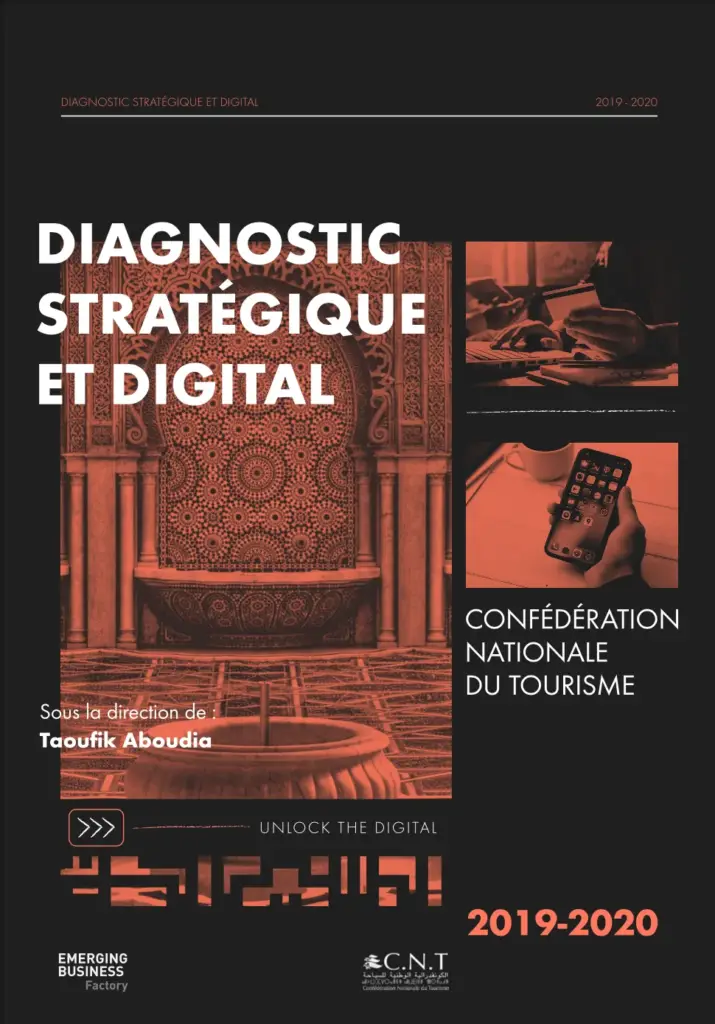
https://emergingbusinessfactory.com/diagnostic-strategique-et-digital/
Insights on Creative Industries in Morocco (downloadable):
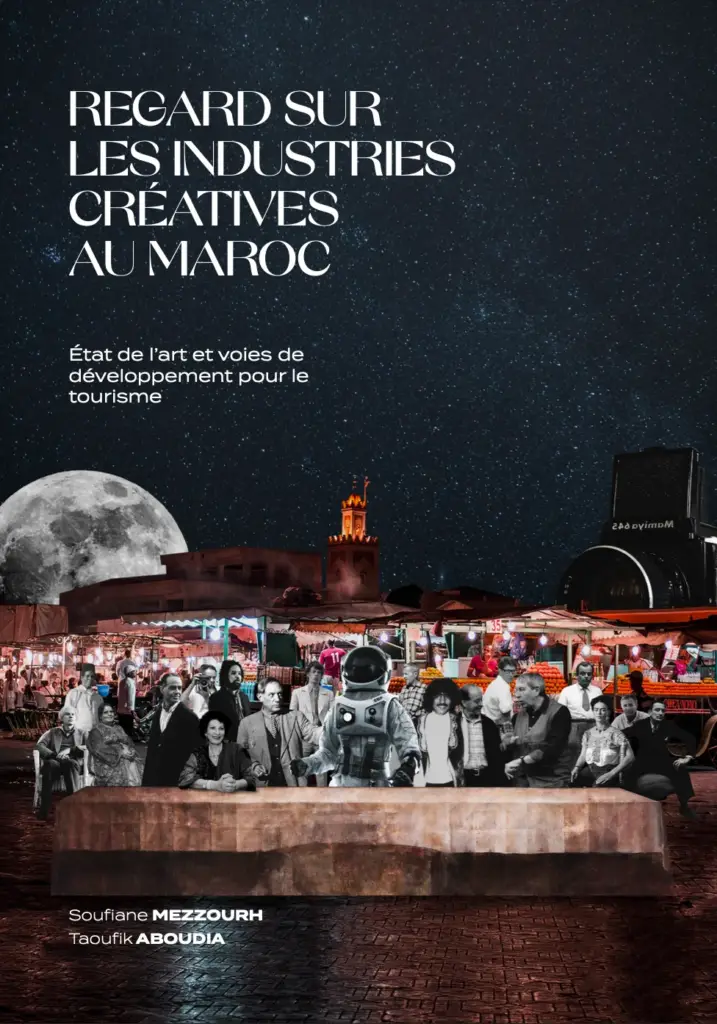
https://emergingbusinessfactory.com/regards-sur-les-industries-creatives-au-maroc/
The singular intuition of Hamid Bentahar
If I had to single out one rare trait in Hamid, it would be this: he understands that tourism is not just an economic mechanism. It is an industry of trust, fulfilled promises, detail, reputation, and collective narrative.
And in such an industry, digital is not a gadget. It is a nervous system.
That intuition changes everything, because it leads to a very concrete question: how does a destination govern its modernity without losing its soul?
How does it move fast without falling apart?
Alchemy: tourism and startups, when trust replaces suspicion
The real issue over the past six years hasn’t been “tourism + startups” on a poster. It’s been the ability to create an economy of trust between two worlds that once looked at each other with suspicion.
On one side, a structured, demanding, responsible sector—subject to seasons and crises. On the other, fast-moving startups: sometimes impatient, often brilliant, sometimes clumsy.
When the alchemy works, it produces something powerful: institutions gain speed and precision, while entrepreneurs gain meaning, robustness, and real ground.
That’s exactly what we began imagining with the “Augmented CRT.”
Later, this logic naturally scaled to the national level with Travel Tech Morocco: same intention, different scale. Not to “create an event,” but to establish a lasting bridge between hospitality and innovation.
Benidorm as a trigger, RakLab as the Moroccan response
What pushed me to write today is also an external mirror:
the Spanish article on Benidorm, which inaugurates a tourism laboratory—organized, legible, fully assumed.
It’s not that Benidorm is “ahead of us” in any absolute sense.
What matters is that they made a decisive move: naming, framing, institutionalizing a place where experimentation happens. (https://cadenaser.com/comunitat-valenciana/2025/12/09/benidorm-abre-las-puertas-de-su-nuevo-laboratorio-turistico-radio-benidorm/)
And that’s where our long-held idea takes on a clear form—one long championed by Hamid: RakLab.
RakLab is Marrakech—Rak—plus Lab.
And in Darija, the mischievous reading is no accident: rak lab, just flip it over.
Flip what? Unnecessary slowness, silos, fear of testing, comfortable certainties.
As we imagined it, RakLab rests on three interconnected engines:
Creative Lab
Experience, design, storytelling, creation. Not to “make things pretty,” but to reinvent hospitality as a competitive and cultural advantage.
Data Lab
Decision-making, fine-grained reading of usage, reputation, flows, seasonality. Tourism can no longer be managed on intuition alone—even if intuition remains precious.
Distribution Lab
The nerve center. How offers are sold, packaged, made visible, connected to platforms—and protected—so that more of the value created remains within the territory.
The key point
RakLab is not meant to be “one more structure.”
It must be a function serving an ambition: accelerate without degrading, modernize without distorting, make the CRT Marrakech-Safi more operational without turning it into a caricature.
Six years of serious work, with limited means
I want to say this without romance: these six years were not a highway.
We did a lot with little—sometimes too little. Concrete progress, long discussions, tests, adjustments, frustrations. But one thing gradually took root: collective maturity.
The understanding that innovation is not a firework—it’s a discipline. And that digital transformation in tourism, here, must be a patient construction, built on trust and proof.
That’s precisely why RakLab is the right next step. Not as a “new idea,” but as a clear, legible, actionable framework to extend what we’ve already learned.
The 2019 photo is not a monument to the past.
It’s a useful reminder: when the right people are brought to the table—without ego, without theater—you create trajectories.
And sometimes, six years later, a Spanish city simply sends this question back to you:
If they institutionalized their lab, what are we waiting for to assume ours—Moroccan-style, with our strengths, our constraints, and our creativity?


